Begum Zorlu, a member of the Global Disorder research group, has published a new article on Nicolás Maduro’s dramatic capture by the United States, revealing the limits of Turkey’s foreign policy solidarity with Venezuela and, more broadly, about the constraints facing middle powers that rely on performative, values-based alliances.
You can find the full article on this link and below.
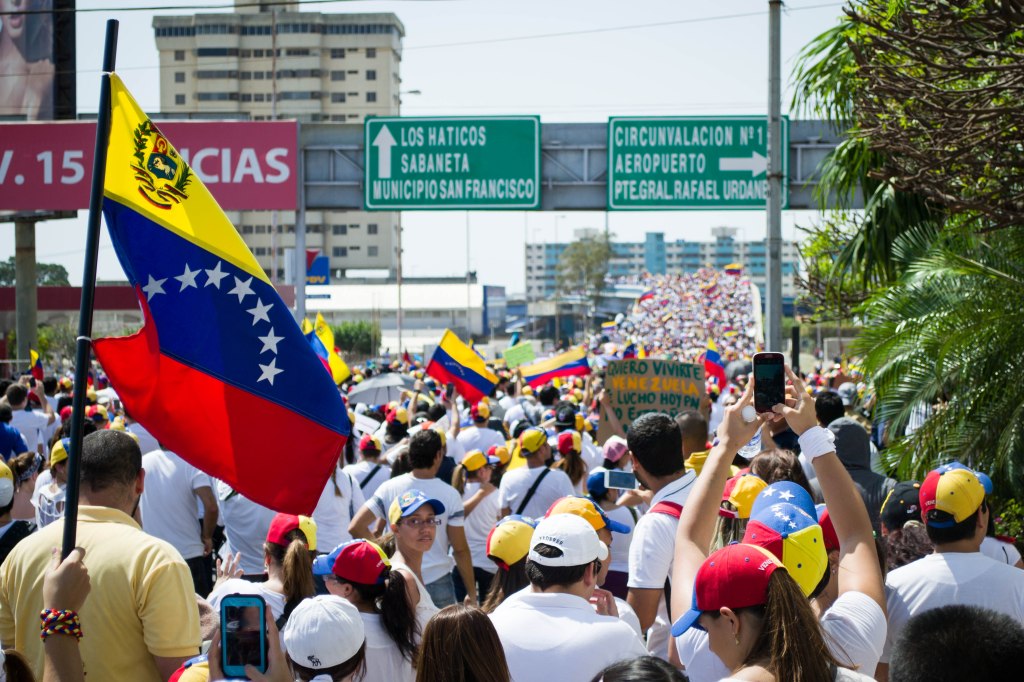
Photo: María Alejandra Mora (SoyMAM)
On January 3, 2026, US special forces carried out a dramatic military operation in Caracas, capturing Venezuelan President Nicolás Maduro and his wife, Cilia Flores, and transporting them to the United States, where they now face federal charges. Dubbed “Operation Absolute Resolve,” the raid represented a US intervention in Latin America on a scale not seen for decades. The Trump administration justified the operation by citing longstanding allegations of Maduro’s involvement in drug trafficking and narco-terrorism, yet the action immediately raised serious questions about national sovereignty, international law, and the unilateral use of force.
For Turkey, however, the episode carried significance that extended well beyond these legal and normative debates. It directly tested a foreign policy relationship that the ruling Justice and Development Party (AKP) has cultivated since 2016, largely through the language of solidarity and shared political grievance. The detention of a leader repeatedly described by President Recep Tayyip Erdoğan as a “brother” forced Ankara to confront the tension between rhetorical alignment and strategic constraint.
From 2016 to the Present: A Relationship Built on “Anti-Coup” Discourse
The failed coup attempt in Turkey in July 2016 marked a decisive turning point in Turkey–Venezuela relations, not simply by deepening bilateral ties but by anchoring them in a shared political narrative. At a moment when many Western leaders responded cautiously to developments in Turkey, Maduro was among the first to call President Erdoğan and express unequivocal support. Turkish Foreign Minister Mevlüt Çavuşoğlu later described this gesture as unforgettable, and it became the symbolic cornerstone of a rapidly expanding relationship. For Ankara, Venezuela was elevated from a distant partner to a political ally within a broader discourse opposing coups, external interference, and what Turkish officials increasingly portrayed as Western double standards.
Over time, this alignment evolved into a distinctly performative partnership. Maduro’s continuous public praise of Erdoğan as a leader who stood with the world’s oppressed helped cultivate an image of ideological affinity that went well beyond conventional diplomacy. Through repeated invocations of “democracy against coups,” the relationship was framed as morally principled and value-driven rather than narrowly transactional. This performative solidarity reinforced the sense of a shared political identity and mutual recognition.
Yet symbolism alone did not fully account for the relationship’s durability. It was accompanied by a set of politically salient economic and strategic ties. In 2017, as many international airlines withdrew from Venezuela, Turkish Airlines became one of the few carriers to initiate flights to Caracas. Turkey also emerged as a supplier for Venezuela’s CLAP food subsidy programme. Bilateral trade peaked in 2018, reaching over $1.1bn. Gold trade, in particular, provided a channel through which actors linked to the Maduro government sought to mitigate the effects of international sanctions, with Turkey importing approximately $900 million worth of Venezuelan gold in 2018. Turkish officials and business groups articulated ambitious trade targets, including aspirations to raise annual trade to $5 billion. These exchanges and intentions were not insignificant, but they fell short of the scale and depth of Turkey’s more developed economic partnerships, providing limited institutional substance to a relationship otherwise driven by political symbolism.
A Fast Break
Maduro’s capture abruptly tested this relationship. Turkish officials characterised the US operation as contrary to international law and warned it could deepen Venezuela’s instability. Notably, however, Ankara stopped short of outright condemnation of the United States or any concrete diplomatic response. The language was measured, cautious, and calibrated to avoid escalation.
This restraint exposed a deeper tension at the core of Turkish foreign policy. AKP elites have long presented themselves as principled opponents of externally imposed regime change, framing this stance as a defining element of Turkey’s international identity. At the same time, relations with the United States remain a central strategic constraint, sharply limiting the scope for sustained solidaristic positioning. Maduro’s detention underscored how quickly partnerships built on rhetorical solidarity can be unsettled when confronted with the realities of hard power.
Turkey’s opposition was quick to seize on this tension. Republican People’s Party leader Özgür Özel recalled President Erdoğan’s post-2016 language of brotherhood towards Maduro, presenting Ankara’s current caution as evidence of an unwillingness to antagonise Donald Trump. The criticism sought to expose a gap between the government’s long-standing anti-coup rhetoric and its restrained response in practice. From the government side, however, Burhanettin Duran, Turkey’s Presidential Director of Communications, pushed back by arguing that foreign policy should be guided by sober state interests rather than emotional or bombastic slogans. The exchange laid bare a familiar fault line in Turkish foreign policy: the recurring tension between principled discourse and pragmatic calculation when external power constraints assert themselves.
The Way Ahead
Overall, Maduro’s capture laid bare Turkey’s difficulty in converting symbolic friendship into sustained solidarity. More broadly, the trajectory of the Turkey–Venezuela relationship illustrates the limits of populist rhetoric in foreign policy, as politically performative alignments tend to give way to pragmatism when power balances shift abruptly. Going forward, the Turkish government is likely to recalibrate its engagement with Venezuela towards a lower-profile, more cautious, and selectively transactional relationship, avoiding overt political identification while preserving limited channels of interaction. In this sense, Ankara’s response to events in Venezuela illustrates how middle powers are compelled to navigate between normative posturing and strategic restraint in an international system increasingly shaped by power asymmetries and sudden geopolitical disruption.
 Global (Dis)order
Leave a comment